Resistance band workouts offer a convenient, portable, and effective way to achieve full-body fitness․ Downloadable PDF guides, like the 4-week and 12-week programs, simplify strength training․
What are Resistance Bands?
Resistance bands are elastic tools used for strength training, rehabilitation, and improving flexibility․ They provide variable resistance, meaning the tension increases as the band is stretched․ Unlike traditional weights, bands are lightweight, portable, and affordable, making them ideal for home workouts or travel․

These bands come in various resistance levels, typically color-coded, allowing users to progressively overload their muscles․ They’re incredibly versatile, suitable for all fitness levels, and can be incorporated into a full body workout․ Many resources, including downloadable PDF routines, demonstrate how to effectively use bands for exercises targeting every muscle group․ They are a godsend for those with limited equipment!
Benefits of Resistance Band Training
Resistance band training offers numerous advantages for fitness enthusiasts of all levels․ They enhance strength, flexibility, and balance, contributing to overall physical well-being․ Bands are joint-friendly, making them suitable for rehabilitation and individuals with injuries․ Their portability allows for workouts anywhere, anytime, complementing full body workout PDF routines․
Furthermore, bands provide constant tension throughout the exercise range, maximizing muscle engagement․ They’re a cost-effective alternative to expensive gym equipment and are easily scalable for progressive overload․ Utilizing a structured program, like a 4-week or 12-week PDF, ensures consistent progress and optimal results․
Resistance Band Types and Choosing the Right One
Resistance bands come in various forms, each suited for different fitness goals․ Loop bands are ideal for lower body exercises, while tube bands with handles offer versatility for upper body and full-body routines, often detailed in a full body workout PDF․ Figure-8 bands provide unique movement patterns․
Choosing the right band depends on your strength level․ Bands are color-coded to indicate resistance – lighter for beginners, heavier for advanced users․ Prioritize band integrity; regularly check for cracks or tears before each workout, as highlighted in safety guidelines․ A comprehensive PDF guide will often suggest appropriate band levels for each exercise․

Warm-up Routine (5-10 Minutes)
Begin with 5-10 minutes of light cardio and dynamic stretching, preparing muscles for a full body resistance band workout, as recommended in many PDF guides․
Dynamic Stretching for Full Body Activation
Prior to initiating a full body resistance band workout – often detailed in downloadable PDF routines – incorporating dynamic stretching is crucial for optimal performance and injury prevention․ These movements actively prepare your muscles for the demands ahead, unlike static stretches which are better suited for cool-downs․
Examples include arm circles, leg swings (forward, backward, and lateral), torso twists, and high knees․ These exercises increase blood flow to the muscles, improve range of motion, and enhance neuromuscular activation․ A proper dynamic warm-up, lasting approximately 5-10 minutes, ensures your body is adequately prepared to handle the resistance provided by the bands․ Many PDF workout guides emphasize the importance of this step for maximizing results and minimizing risk․
Light Cardio to Increase Blood Flow
Complementing dynamic stretching, light cardio is a vital component of a pre-workout routine outlined in many full body resistance band workout PDF guides․ This phase aims to further elevate your heart rate and increase blood circulation throughout the body, delivering oxygen and nutrients to the muscles․
Effective options include jogging in place, jumping jacks, high knees, butt kicks, or brisk walking․ Aim for 5-10 minutes of low-intensity activity․ This prepares your cardiovascular system for the increased demands of resistance training․ A warmed-up body responds better to exercise, enhancing performance and reducing the likelihood of strains or injuries․ Remember to consult a PDF guide for specific recommendations tailored to your fitness level․

Upper Body Resistance Band Exercises
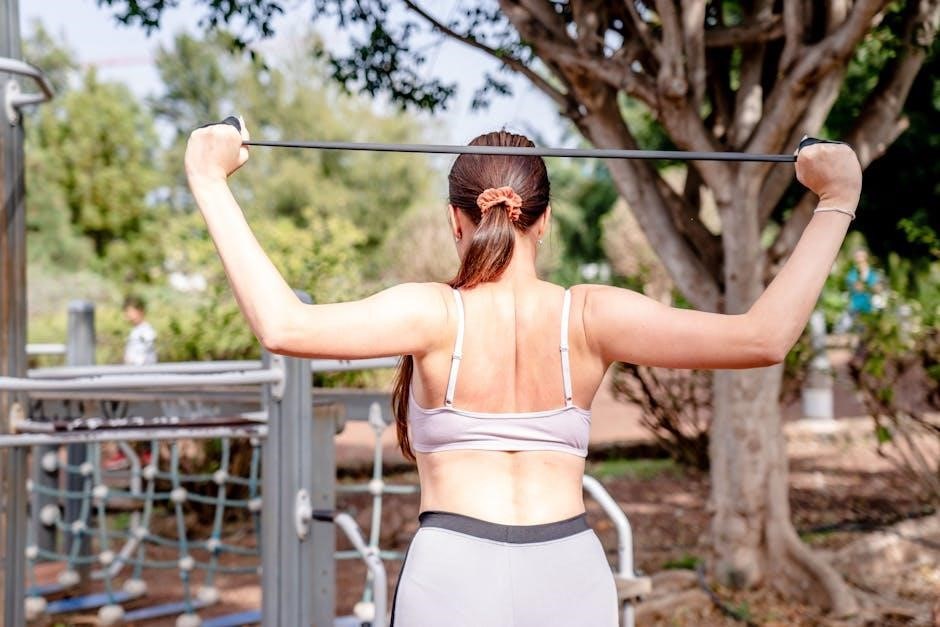
Resistance band workouts effectively target the upper body with exercises like chest presses, bicep curls, tricep extensions, shoulder presses, and rows – often detailed in PDF guides․
Chest Press with Resistance Band
Performing the Chest Press: Secure the resistance band around your back, holding one end in each hand․ Lie on your back with knees bent and feet flat on the floor․ Extend your arms straight above your chest, ensuring constant tension on the band․
Execution & Form: Slowly lower your elbows out to the sides, mimicking a dumbbell chest press, until your upper arms are parallel to the floor․ Maintain a controlled descent and avoid letting the band lose tension․ Push the band back to the starting position, focusing on squeezing your chest muscles․
PDF Resources: Many full body resistance band workout PDF guides demonstrate proper form for this exercise․ Beginners should start with a lighter band and gradually increase resistance as strength improves․ Completing 12-15 repetitions for 3-4 sets is a common recommendation found within these downloadable programs․
Bicep Curls with Resistance Band
Setting Up for Curls: Stand on the resistance band with feet shoulder-width apart, holding one end in each hand․ Keep your elbows close to your sides throughout the exercise․ This ensures focused bicep engagement and prevents momentum from assisting the lift․
The Curling Motion: Curl the band upwards towards your shoulders, squeezing your biceps at the top of the movement․ Control the descent, resisting the band’s pull, and fully extend your arms without locking your elbows․
PDF Guidance: Numerous full body resistance band workout PDF resources illustrate correct bicep curl technique․ Typically, 3 sets of 10-12 repetitions are suggested․ Adjust band resistance based on your strength level, as detailed in many downloadable guides․
Tricep Extensions with Resistance Band
Anchoring the Band: Securely anchor the resistance band overhead, perhaps under a sturdy doorframe or using a pull-up bar․ Grip the band with both hands, palms facing each other․ Maintaining a stable core is crucial for isolating the triceps․
The Extension Movement: Extend your forearms upwards, straightening your elbows and focusing on contracting your triceps․ Keep your upper arms stationary throughout the exercise․ Slowly lower the band back to the starting position, controlling the resistance․
PDF Resources: Many full body resistance band workout PDF guides demonstrate proper form for tricep extensions․ Aim for 3 sets of 12-15 repetitions․ Adjust band tension to match your fitness level, as outlined in available programs․
Shoulder Press with Resistance Band
Band Placement & Grip: Stand on the resistance band with feet shoulder-width apart, holding the ends with palms facing forward․ Ensure a secure grip to maintain control throughout the movement․ This exercise effectively targets the deltoids, building shoulder strength․
Pressing Motion: Press your hands upwards, extending your arms overhead, mimicking a dumbbell shoulder press․ Focus on controlled movements, squeezing your shoulder muscles at the top of the press․ Slowly lower the band back to the starting position․
PDF Guidance: Full body resistance band workout PDF resources often include visual demonstrations of proper shoulder press technique․ Perform 3 sets of 10-12 repetitions․
Resistance Band Rows
Setup & Anchor Point: Sit on the floor with legs extended, looping the resistance band around your feet․ Maintain a straight back and slight bend in your knees․ Grip the band ends, palms facing each other, initiating the rowing motion․
Pulling Phase: Pull the band towards your torso, squeezing your shoulder blades together․ Keep your elbows close to your body throughout the movement․ This targets the back muscles, promoting posture and strength․
PDF Resources: Many full body resistance band workout PDF guides demonstrate correct form for resistance band rows․ Aim for 3 sets of 12-15 repetitions, focusing on controlled contractions․

Lower Body Resistance Band Exercises
Resistance bands effectively target legs and glutes․ PDF workout routines often include squats, glute bridges, lateral walks, and hamstring curls for lower body strength․
Squats with Resistance Band
Squats with resistance bands are a foundational lower body exercise, frequently detailed in full body resistance band workout PDFs․ To perform, place the band around your thighs, just above the knees․ Stand with feet shoulder-width apart, maintaining a neutral spine and engaged core․
Lower your hips as if sitting back into a chair, keeping your back straight and chest up․ Ensure your knees track in line with your toes, avoiding inward collapse․ The resistance band adds intensity, activating glutes and quads further․
Drive through your heels to return to the starting position, squeezing your glutes at the top․ PDF guides often recommend 3 sets of 12-15 repetitions, adjusting band resistance based on fitness level․ Proper form is crucial to prevent injury․
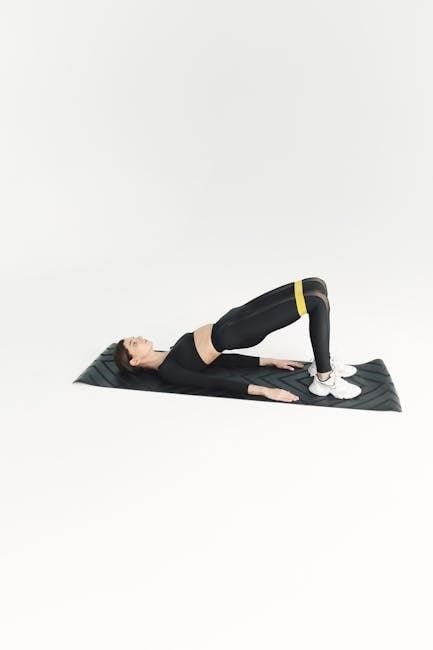
Glute Bridges with Resistance Band
Glute bridges with a resistance band effectively target the glutes and hamstrings, commonly featured in full body resistance band workout PDFs․ Position the band around your thighs, just above the knees․ Lie on your back with knees bent and feet flat on the floor, hip-width apart․
Engage your core and squeeze your glutes to lift your hips off the floor, creating a straight line from your shoulders to your knees․ The band provides added resistance, intensifying the glute activation․
Hold the contracted position briefly, then slowly lower your hips back to the starting position․ PDF guides typically suggest 3 sets of 15-20 repetitions․ Focus on controlled movements and maintaining proper form throughout the exercise․
Lateral Walks with Resistance Band
Lateral walks with a resistance band are a fantastic exercise for strengthening the gluteus medius, crucial for hip stability, and often included in full body resistance band workout PDFs․ Place the band around your ankles or just above your knees․ Stand with your feet hip-width apart, knees slightly bent in a semi-squat position․
Maintaining the squat position and keeping tension on the band, step sideways with one foot, followed by the other․ Take approximately 10-15 steps in one direction, then repeat in the opposite direction․
PDF workout routines often recommend 3 sets of 15-20 steps per side․ Focus on keeping your core engaged and maintaining a controlled, slow pace throughout the exercise․
Hamstring Curls with Resistance Band
Hamstring curls effectively target the back of your thighs, and are frequently featured in full body resistance band workout PDFs․ Securely anchor the resistance band to a stable object at ankle height․ Attach the other end of the band around your ankle․ Stand facing the anchor point, maintaining a slight bend in your knee․
Keeping your upper body stable and core engaged, slowly curl your heel towards your glutes, contracting your hamstring muscles․ Control the movement as you return to the starting position․
Many PDF guides suggest 3 sets of 12-15 repetitions․ Ensure consistent tension on the band throughout the exercise for optimal results․
Calf Raises with Resistance Band
Calf raises, often included in comprehensive full body resistance band workout PDFs, effectively strengthen the lower leg muscles․ Stand with your feet hip-width apart, placing the resistance band across the balls of your feet, holding the ends in your hands․ Maintain a slight bend in your knees throughout the exercise․
Slowly rise up onto your toes, contracting your calf muscles and resisting the band’s pull․ Hold briefly at the top of the movement, then slowly lower back down․
PDF workout routines typically recommend 3 sets of 15-20 repetitions․ Focus on controlled movements and maintaining balance for maximum benefit․

Core Resistance Band Exercises
Resistance bands enhance core workouts, offering variable resistance for exercises like Russian twists and wood chops, often detailed in full body workout PDFs․
Russian Twists with Resistance Band
Russian twists, when performed with a resistance band, significantly amplify core engagement․ Secure the band around your feet or a stable object, and hold the ends with both hands․ Sit with your knees bent and lean back slightly, maintaining a straight back․
Twist your torso from side to side, bringing the band across your body․ Focus on controlled movements, engaging your obliques and abdominal muscles throughout the exercise․ Many full body resistance band workout PDFs include variations, such as holding a weight alongside the band for increased intensity․
Complete 12-15 repetitions per side for 3-4 sets․ Proper form is crucial to avoid strain; maintain a stable core and avoid jerky motions․ This exercise, often found in comprehensive workout PDFs, builds rotational strength and stability․
Wood Chops with Resistance Band
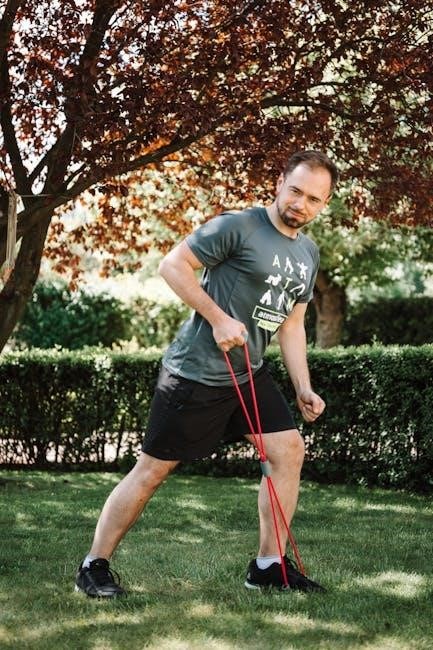
Wood chops with a resistance band are a dynamic exercise targeting your obliques, core, and shoulders․ Anchor the band low to the ground, and grasp the handle with both hands․ Stand with feet shoulder-width apart, slightly staggered for stability․
Rotate your torso and pull the band diagonally across your body, as if chopping wood, extending your arms․ Maintain a slight bend in your elbows and engage your core throughout the movement․ Many full body resistance band workout PDFs demonstrate proper technique;
Complete 10-12 repetitions per side for 3-4 sets․ Focus on controlled movements and avoid twisting solely from your arms․ This exercise, frequently included in workout PDFs, enhances rotational power and core stability․
Plank with Resistance Band
Plank with resistance band significantly increases core engagement and stability․ Loop a resistance band around your feet and hold the ends under your hands in a plank position․ Ensure your body forms a straight line from head to heels, maintaining a neutral spine․
Actively press your elbows slightly outward against the band’s resistance, preventing your hips from sagging or lifting․ Hold the plank for 30-60 seconds, focusing on controlled breathing and core activation․ Many full body resistance band workout PDFs include variations․
Complete 3-4 sets․ This exercise, often detailed in workout PDFs, builds isometric strength and endurance in your core, shoulders, and arms․

Creating a Full Body Workout Routine
Full body resistance band workout PDFs offer structured programs, from 4-week beginner plans to comprehensive 12-week guides, for optimal results․
Sample 4-Week Resistance Band Program
A foundational 4-week program, often available as a PDF, is ideal for beginners․ Week 1 focuses on mastering form with lighter bands, performing 2-3 sets of 12-15 repetitions for each exercise․
Weeks 2 and 3 progressively increase resistance by using heavier bands or doubling up․ Introduce more complex movements, maintaining proper technique․ Aim for 3 sets of 10-12 repetitions․
Week 4 incorporates circuit training – performing exercises back-to-back with minimal rest․ This boosts cardiovascular fitness alongside strength․ Consider a routine including squats, rows, chest presses, and bicep curls․
Downloadable PDFs often detail specific exercises and progression strategies, ensuring a safe and effective introduction to resistance band training․ Remember to prioritize warm-up and cool-down routines․
12-Week Resistance Band Workout Guide
A comprehensive 12-week guide, frequently found as a PDF, provides a structured path to significant strength gains and body transformation․ This program caters to all fitness levels, starting with foundational exercises and gradually increasing intensity․
The initial weeks emphasize proper form and muscle activation using lighter resistance․ Subsequent phases introduce progressive overload – increasing band resistance, repetitions, or sets․ Expect variations in exercises targeting different muscle groups each week․
PDF guides often include detailed exercise demonstrations and weekly schedules․ They may incorporate split routines (e․g․, upper/lower body days) for optimized recovery․ Consistency is key to achieving results․
Advanced users can explore techniques like drop sets and supersets to further challenge their muscles․ Remember to prioritize safety and listen to your body․
Cool-down and Stretching
Post-workout stretching, often included in PDF routines, is crucial for muscle recovery and flexibility․ Spend 5-10 minutes on static stretches after each session․
Static Stretching for Muscle Recovery
Static stretching is a vital component of any full body resistance band workout, and is often detailed within downloadable PDF guides․ Holding each stretch for 20-30 seconds allows muscles to lengthen and recover effectively․ Focus on major muscle groups worked during your routine – chest, back, shoulders, biceps, triceps, quads, hamstrings, and calves․
Examples include holding a tricep stretch by reaching one arm overhead and bending at the elbow, or a hamstring stretch by reaching for your toes․ Proper stretching reduces muscle soreness, improves flexibility, and prevents injuries․ Many PDF workout plans incorporate specific static stretches tailored to the exercises performed, ensuring a comprehensive recovery process․ Prioritizing this cool-down phase maximizes the benefits of your resistance band training․
Importance of Post-Workout Stretching
Post-workout stretching, often outlined in full body resistance band workout PDF guides, is crucial for optimizing recovery and preventing injury․ It helps to gradually decrease muscle tension and heart rate, transitioning the body from exertion to rest․ Ignoring this step can lead to increased muscle soreness and reduced flexibility․
Stretching improves blood flow to muscles, aiding in the removal of metabolic waste products․ A dedicated cool-down, including static stretches, enhances range of motion and prepares muscles for future workouts․ Many PDF resources emphasize the importance of a 5-10 minute stretching session following resistance band exercises, contributing to long-term fitness gains and overall well-being․
Safety Considerations
Resistance band workout PDF guides stress checking band integrity before each use, ensuring screws on weights are tight, and using proper form to avoid injury․
Checking Band Integrity
Before initiating any full body resistance band workout – especially when following a PDF program – meticulous inspection of your bands is paramount for safety․ Resources emphasize the critical need to verify that the band or tube is securely anchored before commencing each exercise․ Look closely for any signs of wear and tear, including cracks, tears, or punctures․
Even seemingly minor imperfections can compromise the band’s strength and potentially lead to snapping during use, causing injury․ Regularly assess the bands, replacing them if any damage is detected․ A proactive approach to band maintenance, as highlighted in various workout PDF guides, significantly reduces the risk of accidents and ensures a productive, safe training session․ Prioritize your well-being by consistently checking for band integrity․
Proper Form and Technique
Successfully implementing a full body resistance band workout, whether guided by a PDF or other resource, hinges on mastering proper form and technique․ Maintaining correct posture throughout each exercise maximizes effectiveness and minimizes the risk of strain or injury․ Focus on controlled movements, engaging the targeted muscle groups throughout the entire range of motion․
Many workout PDFs include visual demonstrations or detailed instructions; utilize these resources diligently․ Avoid rushing through repetitions – prioritize quality over quantity․ If you’re unsure about proper form, consider consulting fitness professionals or seeking guidance from online tutorials․ Consistent attention to technique ensures you reap the benefits of resistance band training safely and efficiently․
Downloading a Resistance Band Workout PDF
Accessing a full body resistance band workout PDF is incredibly straightforward, offering a convenient way to structure your fitness routine․ Numerous online resources provide free downloadable programs, ranging from beginner-friendly introductions to advanced 12-week transformation guides․ Extension Wellness and Reddit’s r/ResistanceBand communities are excellent starting points for finding suitable PDFs․
These PDFs often contain detailed exercise instructions, rep/set recommendations, and workout schedules․ Before downloading, ensure the source is reputable and the program aligns with your fitness level․ Consider programs offering visual aids or video links for proper form․ A well-designed PDF will empower you to achieve your fitness goals effectively at home․